
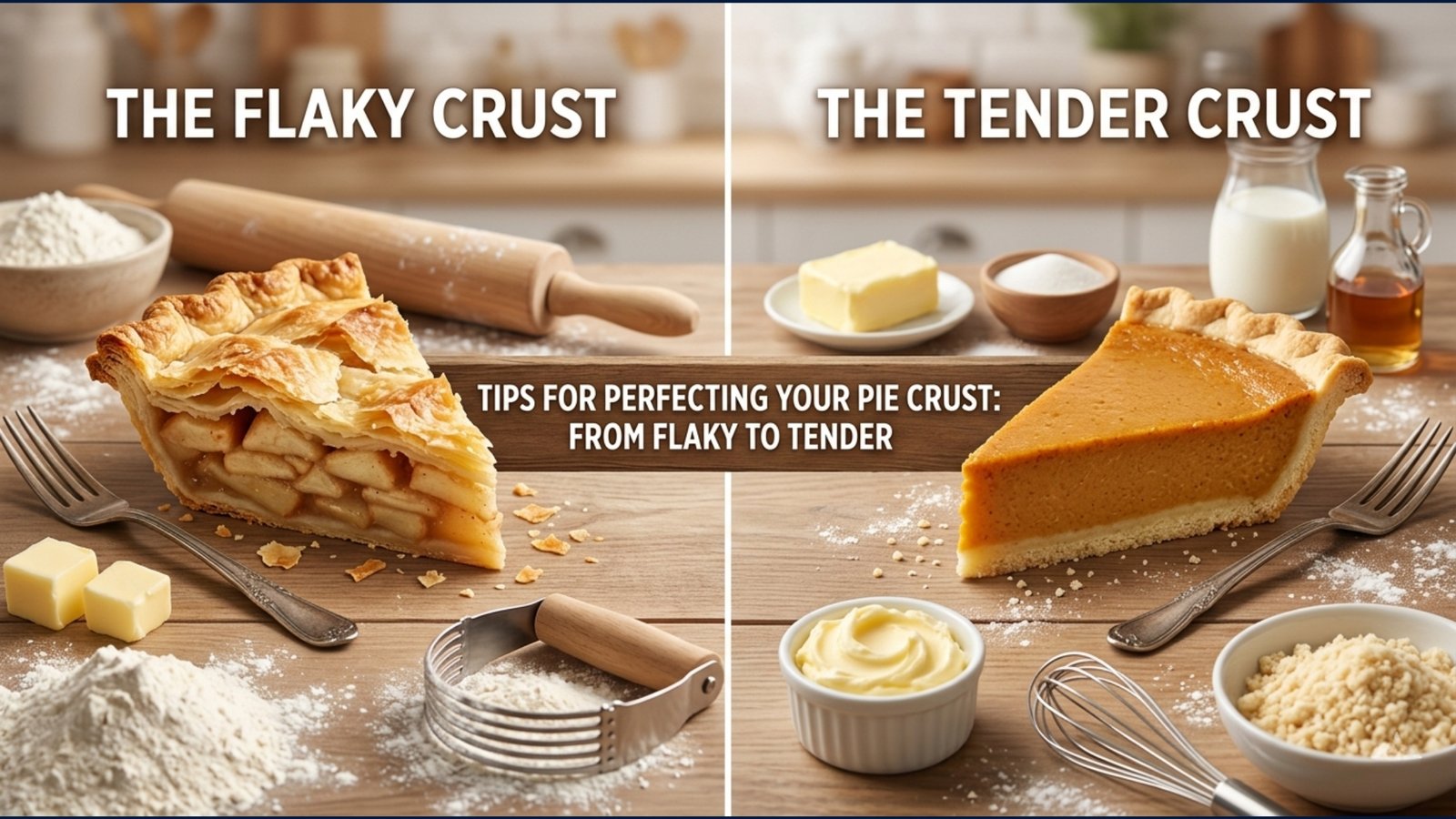
Tips for Perfecting Your Pie Crust: From Flaky to Tender
A perfect pie crust can elevate your dessert from ordinary to exceptional. Whether you prefer a light, flaky
crust that shatters delicately with each bite or a soft, tender crust that melts in your mouth, the secret lies
in understanding a few key techniques. Let’s explore how to master both textures and choose what works
best for your pie.
Understanding the Difference
Before diving into techniques, it’s important to know what sets flaky and tender crusts apart.
Flaky crust: Characterized by visible layers and a crisp bite. Ideal for fruit pies.
Tender crust: Smooth, soft, and crumbly. Perfect for tarts and custard-based pies.
The difference comes down to how fat, liquid, and mixing methods are handled.
How to Achieve a Flaky Pie Crust
If you love those delicate, buttery layers, follow these essential tips:
1. Keep Everything Cold
Cold butter or shortening is crucial. When baked, the solid fat melts and releases steam, creating beautiful
layers.
2. Don’t Overmix
Mix the dough just until it comes together. Visible chunks of butter (pea-sized) are a good sign—they
create flakiness.
3. Use Minimal Liquid
Too much water develops gluten, making the crust tough instead of crisp.
4. Chill the Dough
Resting the dough in the refrigerator helps relax gluten and keeps the fat firm, preventing shrinkage.
5. Gentle Handling
Handle the dough lightly to avoid warming the fat or overworking the gluten.
How to Achieve a Tender Pie Crust
For a softer, melt-in-the-mouth texture, adjust your technique slightly:
1. Blend Fat Thoroughly
Mix the fat into the flour until it resembles fine crumbs. This coats the flour and prevents layer formation.
2. Use Slightly More Liquid
A bit more liquid makes the dough softer and easier to work with.
3. Add Tenderizing Ingredients
Sugar, milk, or even a touch of vinegar or lemon juice helps inhibit gluten development, resulting in a
softer crust.
4. Use Softer Fat
Unlike flaky crusts, slightly softened fat works better here for even distribution.
5. Avoid Over-Chilling Before Rolling
A slightly softer dough yields a more tender bite.
Key Differences at a Glance
• Element
• Flaky Crust
• Tender Crust
• Fat
• Cold, chunky
• Well blended
• Mixing
• Minimal
• Thorough
• Liquid
• Less
• Slightly more
• Texture
• Crisp & layered
• Soft & crumbly
Which One Should You Choose?
Go for a flaky crust when making fruit pies like apple or berry—it adds texture and contrast.
Choose a tender crust for custard pies, cream pies, or tarts where a soft base complements the filling.

Final Thoughts
Perfecting pie crust is all about control—of temperature, technique, and ingredients. Once you
understand how each factor affects texture, you can confidently create a crust that suits your recipe
perfectly.