
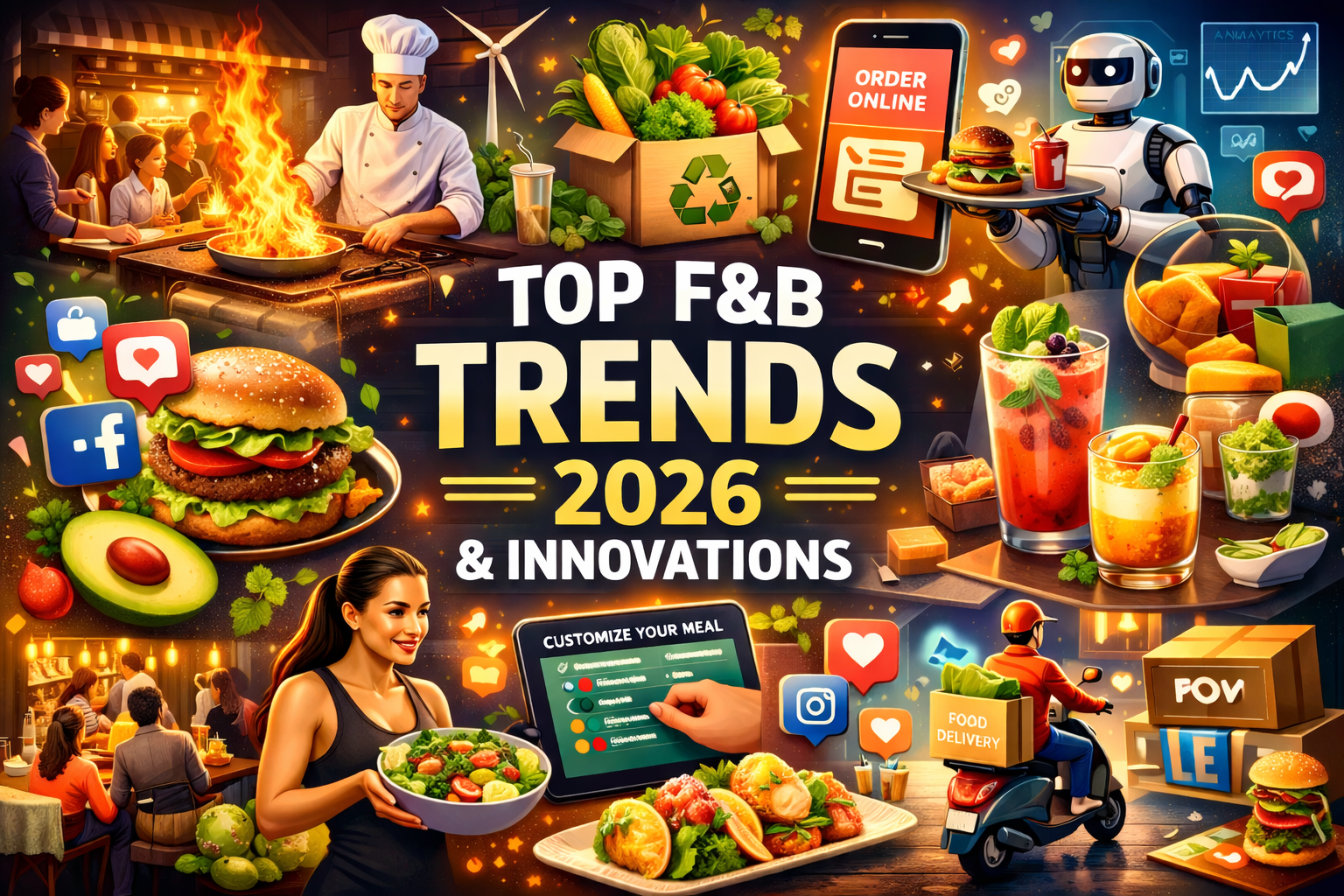
Top F&B Trends & Innovation
The Food & Beverage (F&B) sector is evolving at a rapid pace, shaped by changing consumer
lifestyles, technological progress, and a growing awareness of health and sustainability. Today’s
guests are not just looking for meals—they are looking for experiences that align with their
values and preferences. This shift is encouraging businesses to rethink traditional approaches and
embrace innovation across every aspect of operations.
1. Experience-Driven Dining
Modern dining is no longer limited to food quality alone. Guests are increasingly drawn to
unique and engaging experiences such as interactive kitchens, chef-led presentations, and themed
environments. Restaurants are focusing on storytelling and ambiance to create memorable
moments that go beyond the plate.
2. Sustainability as a Core Practice
Sustainability has become a fundamental expectation rather than an optional feature. F&B
establishments are adopting responsible practices like sourcing local ingredients, minimizing
food waste, and using eco-friendly packaging. These efforts not only support the environment
but also appeal to conscious consumers.
3. Growth of Plant-Based Options
Plant-based food is gaining widespread acceptance, moving beyond niche markets into
mainstream menus. Chefs and brands are innovating to improve taste, texture, and nutritional
value, making these options attractive to both vegetarians and non-vegetarians alike.
4. Focus on Health & Wellness
Consumers are paying closer attention to what they eat and how it affects their well-being. This
has led to a rise in demand for functional foods that offer additional benefits such as improved
immunity, digestion, and energy levels. Balanced, nutrient-rich meals are becoming a priority.
5. Technology Integration in F&B
Technology is playing a transformative role in the industry. From digital ordering systems and
contactless payments to AI-driven insights and smart kitchen equipment, businesses are
leveraging technology to enhance efficiency and improve customer satisfaction.
6. Personalized Dining Experiences
Customization is becoming a key expectation among customers. Whether it is adjusting
ingredients, portion sizes, or dietary preferences, guests appreciate having control over their
dining choices. This trend is particularly popular among younger, health-conscious consumers.
7. Influence of Social Media
Social media platforms are significantly impacting food trends and consumer behavior. Visually
appealing dishes and unique presentations often gain popularity online, encouraging restaurants
to innovate in both menu design and plating styles to attract attention.
8. Creative Flavor Combinations
Consumers are becoming more open to experimenting with new tastes. Fusion cuisine, bold
flavor pairings, and innovative textures are gaining traction. This encourages chefs to blend
culinary traditions and create distinctive dishes.
9. Rise of Non-Alcoholic Beverages
There is a noticeable shift toward healthier beverage choices. Mocktails, specialty coffees, and
functional drinks are becoming increasingly popular as consumers look for alternatives that
support wellness without compromising on taste.
10. Demand for Convenience
Convenience continues to shape consumer preferences. Options such as takeaway, delivery
services, and ready-to-eat meals are in high demand. Many businesses are adapting by
developing delivery-focused models and expanding their off-premise offerings.
Conclusion
The F&B industry is moving toward a future defined by innovation, sustainability, and customer focused experiences. Businesses that stay adaptable and responsive to changing trends will be
better positioned to succeed. By combining creativity with technology and responsible practices,
the industry can continue to grow while meeting the expectations of modern consumers.