
Emergency & Evacuation Protocols in the Front Office Department
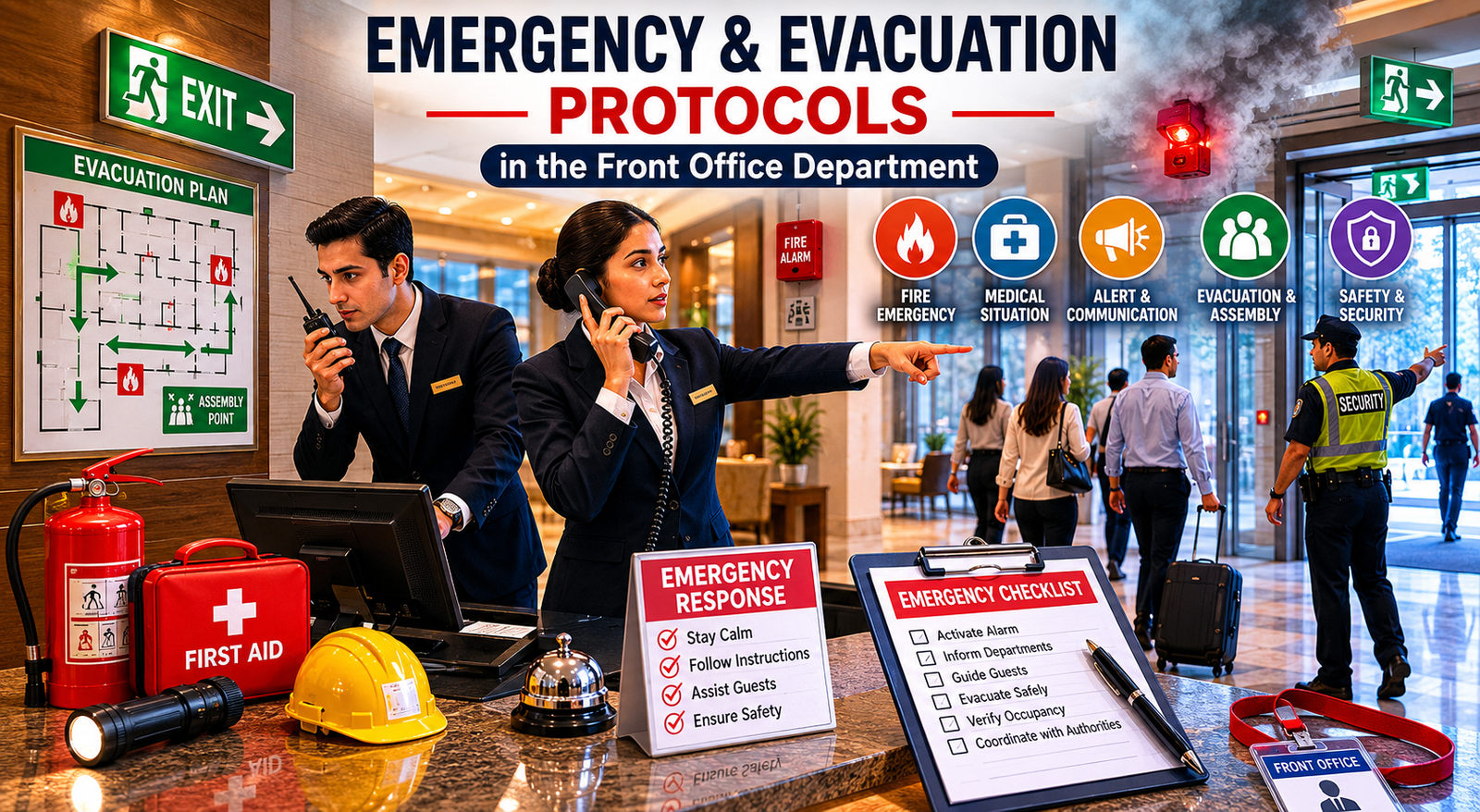
Guest safety is one of the most important responsibilities in the hospitality industry. Hotels welcome people from different places every day, making emergency preparedness a critical part of hotel operations. During any crisis situation, the front office department becomes the central point for communication, coordination, and guest assistance. From handling fire incidents to managing medical emergencies or natural disasters, the front office team must respond quickly and professionally to ensure the safety of everyone on the property.(Emergency & Evacuation Protocols in the Front Office Department)
Strong emergency and evacuation procedures help hotels reduce confusion, protect lives, and maintain operational control during difficult situations. A trained front office staff can make a major difference in managing emergencies smoothly and efficiently.
Why Emergency Protocols Matter in Hotels
Hotels operate continuously and accommodate large numbers of guests, employees, and visitors. Because of this, even a small emergency can create panic if it is not handled properly. Emergency protocols are designed to provide clear guidance and organized action during unexpected events.
Effective emergency procedures help hotels:
- Ensure guest and staff safety
- Reduce panic during critical situations
- Support fast evacuation
- Protect hotel property and assets
- Maintain the hotel’s professional reputation
- Meet safety and legal requirements
The front office department plays an important role because it has direct contact with guests and access to important occupancy information.
Common Emergencies in Hotels
Hotels may experience different types of emergencies that require immediate attention and organized action.
Fire Emergencies
Fire accidents are among the most serious hotel emergencies. They may result from electrical issues, kitchen accidents, or negligence. Quick communication and evacuation are essential during fire incidents.
Medical Situations
Guests or employees may suddenly require medical assistance because of illness, injury, or health complications. The front office often coordinates emergency medical support.
Natural Disasters
Floods, earthquakes, storms, and other natural disasters can disrupt hotel operations and threaten guest safety.
Security Concerns
Security-related incidents such as suspicious activities, theft, or threats require immediate reporting and coordination with hotel security teams and authorities.
Power and Technical Failures
Power outages or technical breakdowns can affect elevators, lighting systems, and communication equipment, creating inconvenience and possible safety risks.
Responsibilities of the Front Office During Emergencies
The front office department acts as the communication hub during emergencies. Staff members are expected to remain calm and guide guests professionally.
Managing Communication
Front office employees share important updates and instructions with guests, hotel departments, emergency responders, and management teams.
Maintaining Guest Information
Accurate guest records help management confirm the number of occupants inside the hotel during evacuation procedures.
Assisting Guests
Reception staff help guests understand evacuation instructions and direct them toward safe areas or emergency exits.
Coordinating with Other Departments
The front office works closely with housekeeping, engineering, security, and management to ensure a smooth emergency response.

Hotel Evacuation Procedures
Evacuation procedures are designed to move guests and staff safely away from danger during emergencies.
Alerting Everyone
Emergency alarms or announcement systems are activated to notify people inside the hotel about the situation.
Informing Departments
The front office immediately contacts all relevant departments so they can begin emergency procedures.
Guiding Guests Safely
Staff members direct guests toward emergency exits and ensure they avoid elevators during firerelated emergencies.
Using Emergency Exits
Clearly marked emergency routes and staircases should be used for safe evacuation.
Gathering at Assembly Points
Guests and staff are guided to designated assembly areas outside the hotel for safety verification.
Verifying Occupancy
The front office helps confirm that all guests and employees have evacuated safely using registration and attendance records.

Importance of Staff Training
Training is essential for effective emergency management.
Hotels should regularly organize:
- Fire safety drills
- Emergency evacuation practices
- First aid training
- Crisis communication sessions
- Security awareness programs
Continuous training improves staff confidence and prepares employees to handle real emergencies effectively.
Safety Equipment Used in Hotels
Hotels rely on various safety systems and equipment to manage emergencies, including:
- Fire extinguishers
- Smoke detectors
- Sprinkler systems
- Emergency lighting
- First aid boxes
- Public announcement systems
- Backup power systems
- Emergency exit signs
Front office staff should know the location and basic operation of this equipment.
Challenges During Emergency Situations
Handling emergencies in hotels can be challenging because staff may face:
- Guest panic and stress
- Language barriers
- Crowded evacuation routes
- Communication difficulties
- Technical system failures
Proper planning and regular practice help reduce these challenges and improve emergency response efficiency.
Best Practices for Effective Emergency Management
Hotels can strengthen their emergency preparedness by:
- Updating guest information regularly
- Maintaining clear evacuation maps
- Conducting routine safety inspections
- Training employees frequently
- Establishing clear standard operating procedures
- Improving communication systems
- Coordinating closely with emergency services
Conclusion
Emergency and evacuation protocols are an essential part of hotel operations. The front office department plays a key role in protecting guests and supporting smooth emergency management during critical situations. By maintaining proper communication, guiding guests carefully, and coordinating with hotel departments and emergency responders, the front office helps ensure safety and order during emergencies. A hotel that invests in staff training, safety systems, and preparedness demonstrates professionalism and a strong commitment to guest well-being. In the modern hospitality industry, effective emergency management is not only a safety requirement but also a reflection of quality service and responsible hotel operations.