
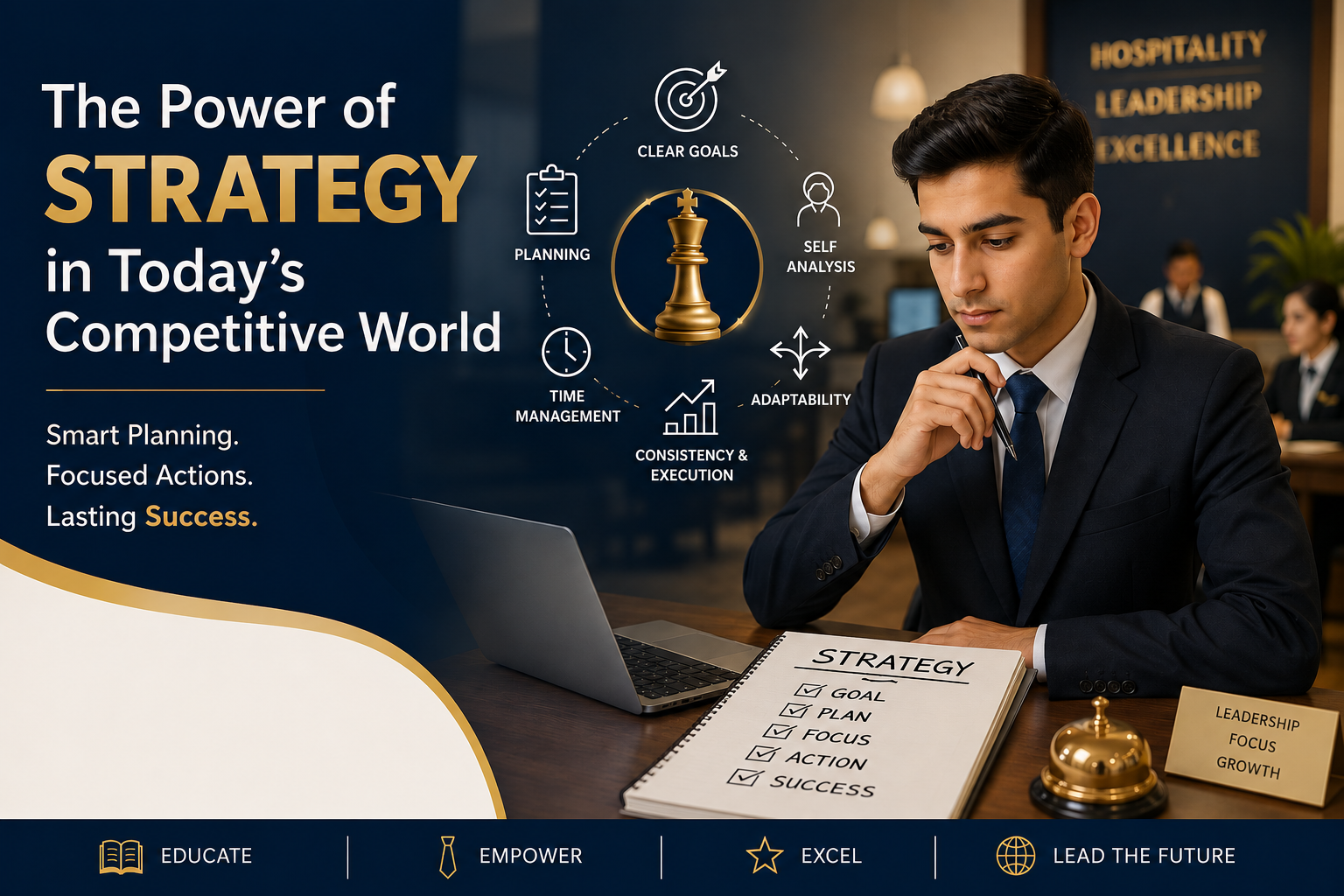
The Power of Strategy in Today’s Competitive World
In today’s fast-paced and ever-evolving world, success is no longer a matter of chance or luck—it is a result of careful planning, clear vision, and most importantly, a well-defined strategy. With competition becoming tougher across every field—be it education, business, careers, or personal growth—having talent alone is not enough. What truly differentiates successful individuals from the rest is their ability to think strategically and act with purpose.
Understanding Strategy
Strategy is not just about making plans; it is about making the right plans. It involves setting clear goals, analyzing situations, understanding strengths and weaknesses, and making informed decisions that lead to long-term success. A good strategy gives direction, helps prioritize efforts, and ensures that every action contributes toward achieving a larger objective.
For example, two students may study equally hard, but the one who studies smartly—focusing on important topics, managing time effectively, and practicing strategically—often performs better. This is the power of strategy.
Why Strategy Matters More Today
The level of competition today is far more intense than ever before. With access to information, advanced technology, and global opportunities, people are constantly striving to be better. This creates a challenging environment where only those with a clear roadmap can thrive.
There are several reasons why strategy has become essential:
- Information overload makes it difficult to focus without direction.
- Time is limited, and strategic planning ensures its best use.
- Expectations are higher, requiring smarter approaches.
- Rapid changes demand flexibility and foresight.
Key Elements of a Successful Strategy
To succeed in today’s competitive environment, one must focus on building a strong strategy:
- Clear Goals
Success begins with clarity. Goals should be specific, measurable, and time-bound. - Self-Analysis
Understanding strengths and weaknesses helps in creating realistic plans. - Planning and Prioritization
Breaking goals into smaller steps makes them achievable. - Time Management
Efficient use of time increases productivity and reduces stress. - Adaptability
Being flexible ensures survival in changing situations. - Consistency and Execution
Without action, even the best strategy fails.
Strategy vs Hard Work
Hard work without direction can lead to wasted effort. Strategy ensures that every step you take moves you closer to your goal. It is the combination of smart planning and consistent execution that leads to real success.
Real-Life Application
Strategy applies to every aspect of life:
- Students use it to plan studies and exams.
- Professionals use it to grow their careers.
- Entrepreneurs use it to build successful businesses.
- Individuals use it to manage personal goals and responsibilities.
Common Mistakes to Avoid
- Lack of clear goals
- Overplanning without execution
- Ignoring feedback
- Fear of failure
- Inconsistency
Avoiding these mistakes strengthens your path to success.
The Role of Mindset
A strong, positive mindset is essential. Challenges and failures are part of the journey, and successful individuals learn from them instead of giving up. Confidence, discipline, and resilience play a major role in executing any strategy effectively.
Conclusion
In today’s competitive world, strategy is not optional—it is essential. It transforms effort into results and dreams into reality. Those who think ahead, plan wisely, and act consistently are the ones who succeed.
Success is not just about working hard; it is about working smart with a clear direction and purpose.
Written by:
Mrs. Swati Kaushal
Training & Placements Head