
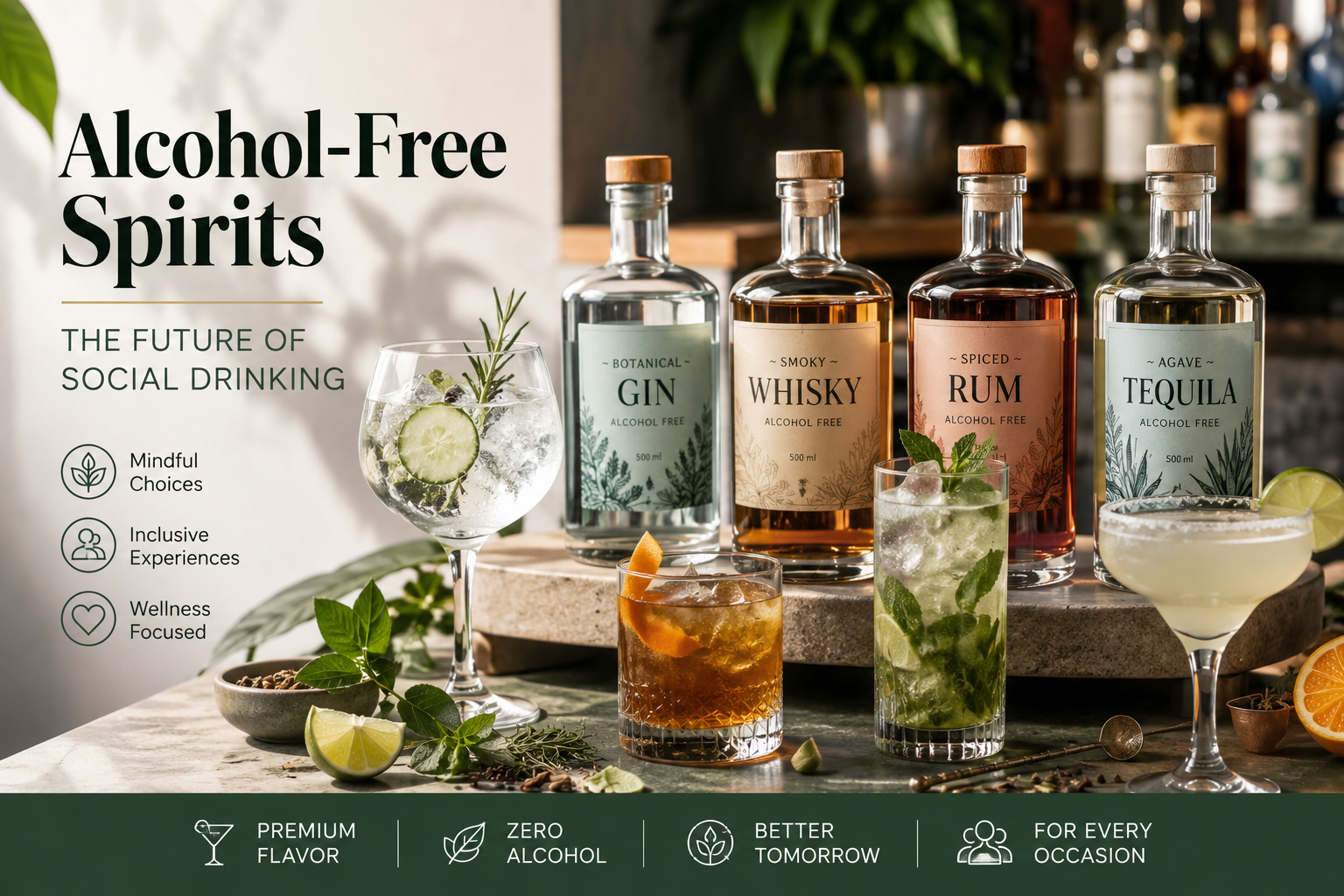
Alcohol-Free Spirits: The Future of Social Drinking
For decades, social drinking has been closely associated with alcoholic beverages. Whether at celebrations, business events, restaurants, or casual gatherings, alcohol has traditionally been at the center of the experience. Today, however, consumer preferences are evolving. A growing number of people are choosing moderation, wellness, and mindful consumption without wanting to give up the ritual and sophistication of enjoying a well-crafted drink.
This shift has fueled the rapid rise of alcohol-free spirits—one of the most exciting innovations in the global beverage industry.
What Are Alcohol-Free Spirits?
Alcohol-free spirits are beverages designed to deliver the flavor, aroma, and experience of traditional spirits such as gin, whiskey, rum, vodka, or tequila without the alcohol content. Unlike mocktails, which are pre-mixed beverages, alcohol-free spirits serve as versatile cocktail bases that can be mixed with tonic, soda, juices, or other ingredients to create sophisticated drinks.
Using botanical extracts, herbs, spices, citrus oils, and advanced distillation techniques, manufacturers create complex flavor profiles that mimic many characteristics of traditional spirits while remaining alcohol-free.
Why Are Consumers Embracing Alcohol-Free Spirits?
The Wellness Revolution
Health and wellness have become major drivers of consumer behavior. Many people are seeking ways to reduce alcohol consumption while maintaining an active social life. Alcohol-free spirits offer an attractive solution by allowing consumers to enjoy premium drinks without concerns about hangovers, excess calories, or impaired performance.
The Rise of the “Sober Curious” Movement
A growing segment of consumers is questioning the role alcohol plays in their lives. Rather than completely abstaining, many are choosing a more balanced approach to drinking. This “sober curious” movement has expanded the market for premium non-alcoholic alternatives.
Inclusive Social Experiences
Alcohol-free spirits enable everyone to participate in social occasions regardless of their drinking preferences. Designated drivers, pregnant women, athletes, health-conscious consumers, and individuals who abstain for religious or personal reasons can enjoy sophisticated beverage experiences alongside traditional drinkers.
How Are Alcohol-Free Spirits Made?
The production process varies by brand but often includes botanical distillation, herbal infusions, natural flavor extraction, citrus oils and aromatic compounds, and specialized blending techniques.
Unlike traditional spirits, these products do not rely on alcohol to carry flavors. Instead, manufacturers use innovative formulations to create depth, complexity, and balance.

Key Categories in the Market
Alcohol-Free Gin Alternatives
Often featuring juniper, citrus, coriander, and herbal notes, these products are among the most popular entries in the category.
Alcohol-Free Whiskey Alternatives
These beverages are designed to mimic the smoky, woody, and spicy characteristics associated with traditional whiskey.
Alcohol-Free Rum Alternatives
Alcohol-free rum alternatives typically feature flavors such as vanilla, caramel, molasses, and tropical spices.
Alcohol-Free Tequila Alternatives
These products are created with earthy, peppery, and citrus-forward profiles inspired by traditional agave spirits.
Opportunities for Restaurants and Bars
The hospitality industry is increasingly recognizing that non-drinkers are valuable customers. Premium alcohol-free spirits allow bars and restaurants to expand beverage menus, increase customer inclusivity, improve guest experiences, generate higher margins through premium mocktail offerings, and differentiate themselves in a competitive market.
Many leading hospitality brands now offer dedicated alcohol-free cocktail menus alongside traditional beverages.
The Emerging Opportunity in India
India’s alcohol-free spirits market is still in its early stages, creating significant opportunities for innovation and growth. Several factors are contributing to market potential, including rising health awareness, growing urban middle-class spending, increased focus on fitness and wellness, demand for premium lifestyle products, and the expansion of modern retail and e-commerce.
Indian consumers are also highly receptive to botanical and herbal flavors, creating opportunities for products inspired by indigenous ingredients such as tulsi, cardamom, saffron, ginger, kokum, and Himalayan herbs.
Challenges Facing the Category
Consumer Education
Many consumers are unfamiliar with the category and may confuse alcohol-free spirits with soft drinks or mocktails.
Taste Expectations
Replicating the complexity and mouthfeel of alcohol remains one of the industry’s biggest technical challenges.
Pricing Perception
Consumers sometimes expect alcohol-free products to be significantly cheaper than alcoholic beverages, despite often requiring equally sophisticated production methods.
What Does the Future Look Like?
Industry experts predict that alcohol-free spirits will become a permanent fixture in beverage menus rather than a temporary trend. As consumer preferences continue shifting toward wellness, moderation, and premium experiences, demand is expected to grow across retail, hospitality, travel, and corporate sectors.
Future innovations may include functional alcohol-free spirits with wellness benefits, regional flavor profiles, AI-driven beverage personalization, sustainable ingredient sourcing, and premium ready-to-drink alcohol-free cocktails.
Conclusion
Alcohol-free spirits represent more than just an alternative to alcohol. They reflect a broader cultural shift toward mindful consumption, inclusivity, and wellness-focused lifestyles. As consumers increasingly seek balance rather than extremes, the category is poised to become a major force in the global beverage industry.
For beverage brands, restaurants, and entrepreneurs, alcohol-free spirits offer an opportunity to serve a new generation of consumers who want all the sophistication of a premium drink—without the alcohol.