
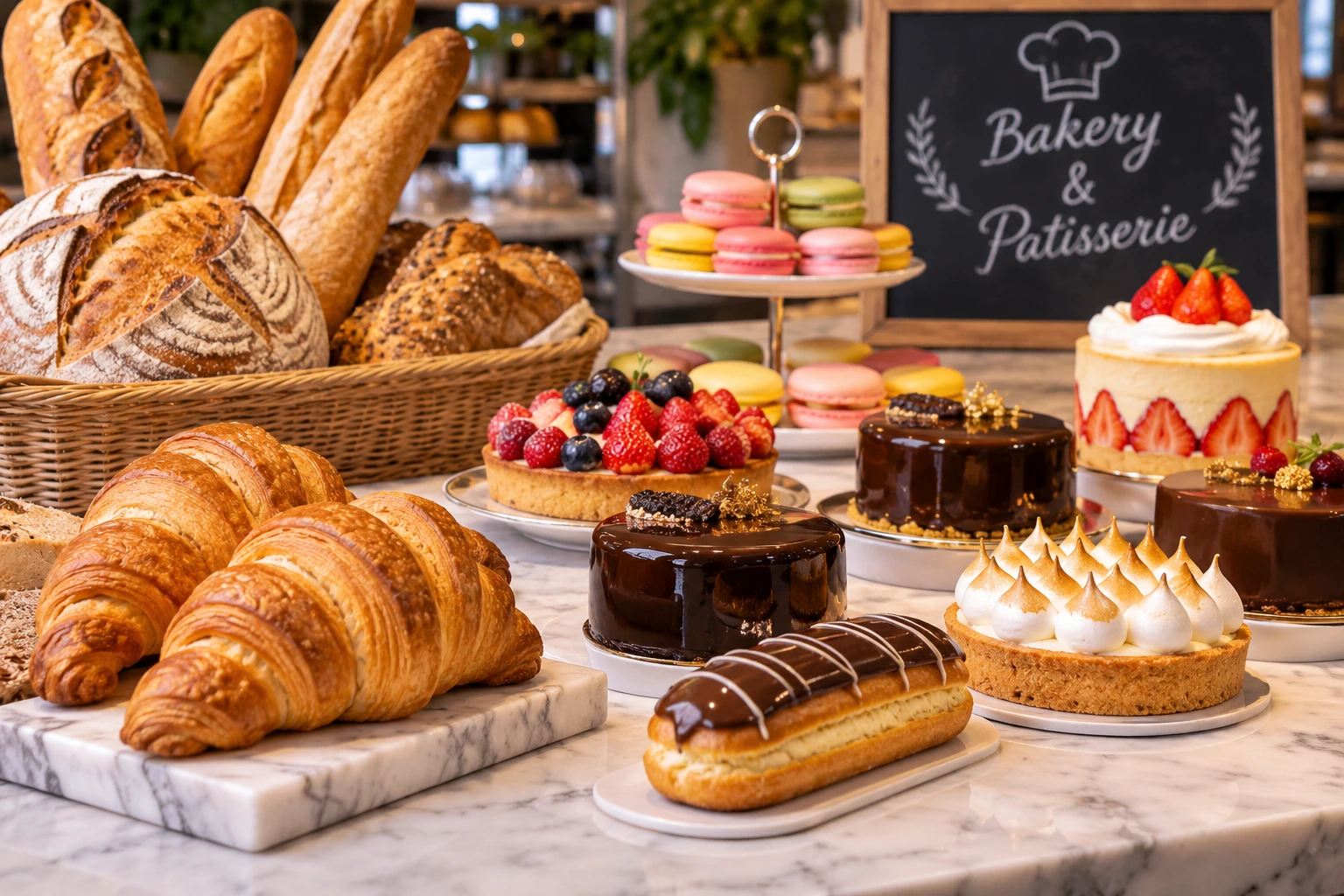
Gastronomy in Bakery and Patisserie: Science, Flavour and Craft
Two bakers can follow the same recipe and still turn out very different cakes. The gap is usually gastronomy: knowing why an ingredient behaves as it does, what heat does to it, and how flavour, texture and looks come together in the final bite. Gastronomy in bakery and patisserie is the working knowledge that makes a result repeatable instead of lucky. This guide covers the science, the flavour logic, modern techniques, Indian fusion and career paths.
- Gastronomy is the “why” behind a recipe: food science, flavour balance, technique and presentation.
- Five reactions drive most baking: fermentation, caramelization, the Maillard reaction, emulsification and gelatinization.
- Great desserts balance sweet, sour, bitter, salty and aroma, and contrast textures.
- Knowing the science lets you fix problems, adapt recipes (eggless, vegan, reduced-sugar) and innovate.
What is gastronomy in bakery and patisserie?
Gastronomy in bakery and patisserie is the study of how ingredients, heat, technique and presentation combine into a finished product. It covers food science (why dough rises, why crusts brown), balance of flavour and texture, plating, and the food traditions behind classics. In short, it is the reasoning behind every step of a recipe.
A chocolate mousse cake shows why this matters. A pastry chef has to manage chocolate tempering, emulsification, aeration, gelatinization, temperature and texture balance together. Mixing and baking is the smaller part of that job.
The science behind baking: five reactions to know
Every ingredient has a job. When you know the job, results become consistent.
| Process | What happens | Where you see it |
|---|---|---|
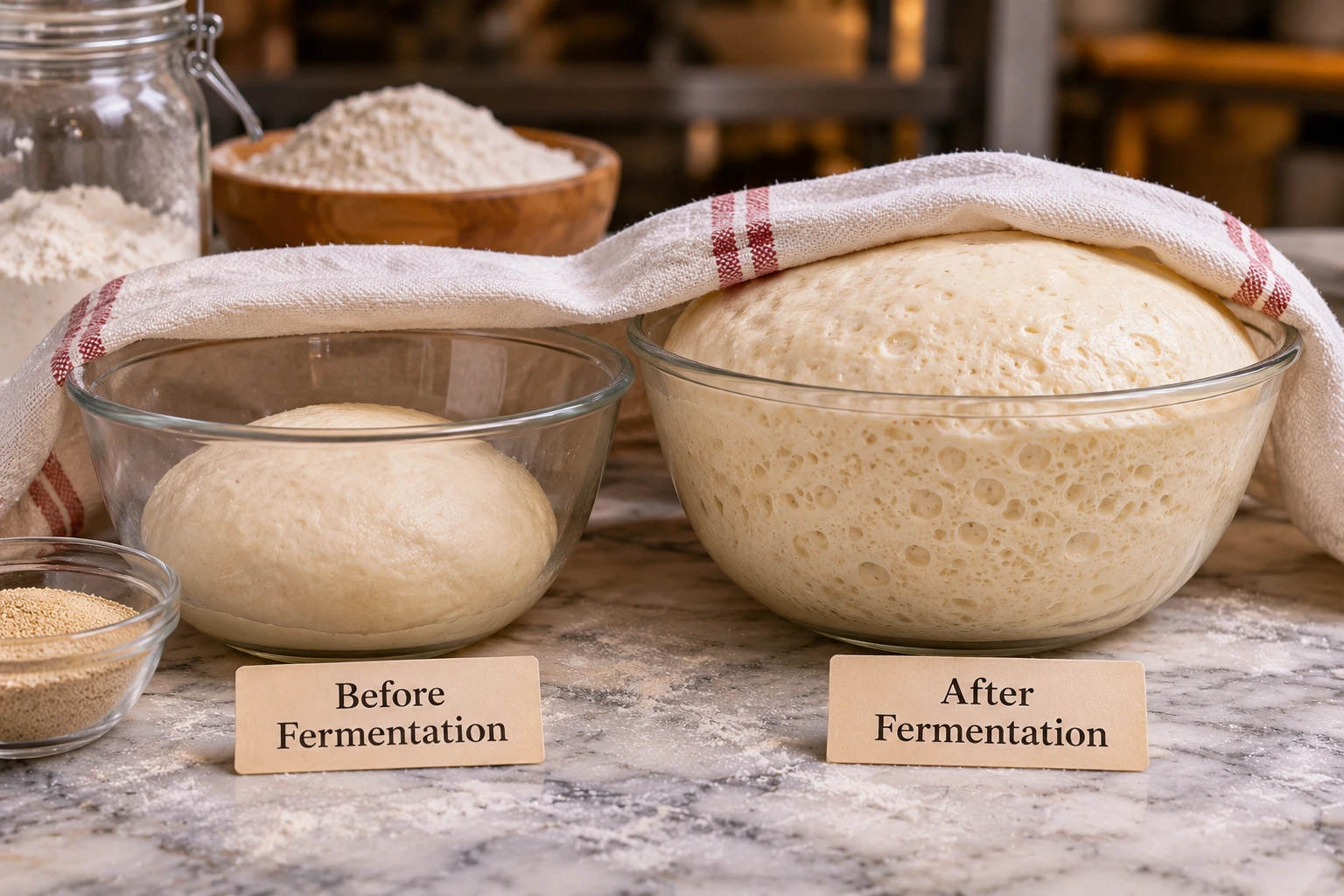
| Fermentation | Yeast turns sugars into carbon dioxide | Bread rises and develops flavour |
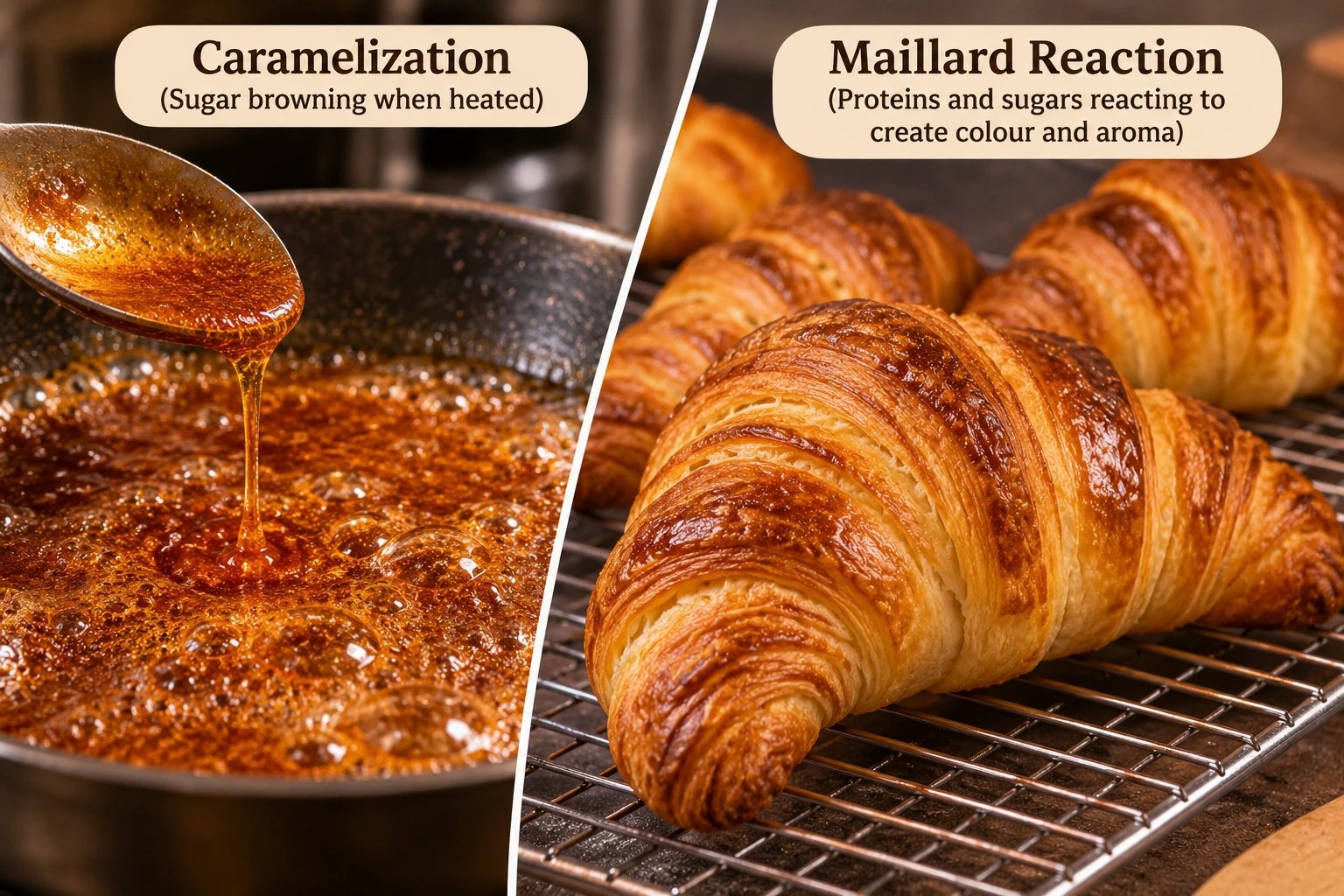
| Caramelization | Sugar browns and gains rich flavour when heated | Caramel, golden cookie edges |
| Maillard reaction | Proteins and reducing sugars react under heat | Crust colour and baked aroma |
| Emulsification | Fat and water are combined into a smooth, stable mixture | Smooth batters, creams and sauces |
| Gelatinization | Starch absorbs liquid and thickens when heated | Custards, pastry cream, structure in baked goods |
Maillard reaction vs caramelization: why your crust browns
Both reactions give browning, but they are not the same thing. Food scientist Kantha Shelke explains in an interview on the Maillard reaction and caramelization that the Maillard reaction needs both amino acids and sugars, while caramelization needs only sugar. The Maillard reaction typically starts above about 140°C, while caramelization of ordinary sugar needs roughly 320°F (about 160°C).
For a baker, this changes how you read the oven. In a cookie both reactions happen, but because cookies carry little protein, caramelization dominates. A milk-rich or egg-rich dough has more protein to feed Maillard browning.
Colour is also not only about temperature. Ragus, a sugar supplier, notes that time, moisture, pH and the type of sugar all influence Maillard browning. So if two trays of the same dough colour differently, check humidity, sugar type and baking time before blaming the oven.
Chocolate tempering: the science behind shine and snap
Tempering is one of the clearest examples of gastronomy in action. Cocoa butter can crystallize in several forms, and only one gives the glossy surface and clean snap you want. According to Chemistry World’s feature on tempering and cocoa butter crystals, that form is Form V; it begins to form just below 35°C, while the unwanted Form IV crystals form at around 27°C. The process is: melt the chocolate fully, cool it so crystals form, then warm it slightly so the unstable crystals re-melt.
Two practical points:
- Exact temperatures vary by chocolate. Follow the manufacturer’s guide for dark, milk and white rather than one fixed number.
- Poor tempering shows up later. Form IV crystals are more prone to bloom than Form V, which is the dull, streaky look on stored chocolate.
Compound chocolate is different. Chocolates made with alternative fats instead of cocoa butter may not need tempering. Check the label before you start.
Flavour and texture: building balance
A good dessert is rarely one note. It pairs opposites:
| Contrast | Why it works |
|---|---|
| Crispy chocolate + smooth mousse | Crunch against softness |
| Soft sponge + crunchy praline | Texture variation in one bite |
| Tangy fruit gel + sweet vanilla cream | Acid cuts sweetness |
| Buttery pastry + creamy custard | Richness with a delicate filling |
| Rich chocolate + citrus | Heavy flavour lifted by freshness |
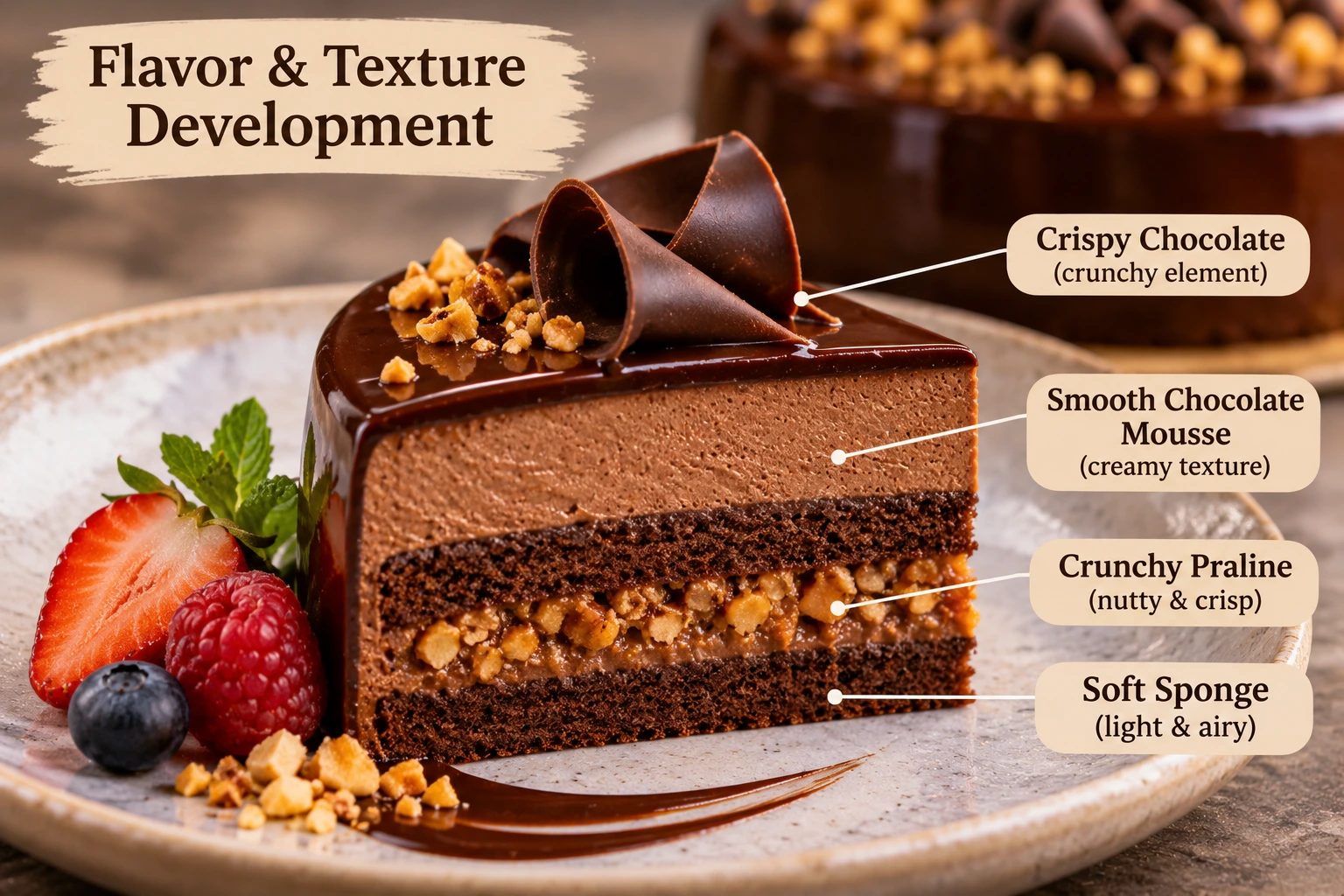
Sweetness, acidity, bitterness, saltiness and aroma all need balancing. If a dessert tastes flat or too sweet, the fix is often a pinch of salt, a little acid or a crisp element, not less sugar across the board.
Modern techniques pastry chefs use
- Molecular gastronomy: scientific methods to make gels, foams, spheres and unusual textures.
- Mirror glazing: smooth, glossy finishes on mousse cakes and entremets.
- Chocolate tempering: controlled crystallization for shine, snap and stability.
- Sous vide: controlled-temperature cooking for some dessert components.
- Dehydration: fruit crisps, powders and decorative elements.
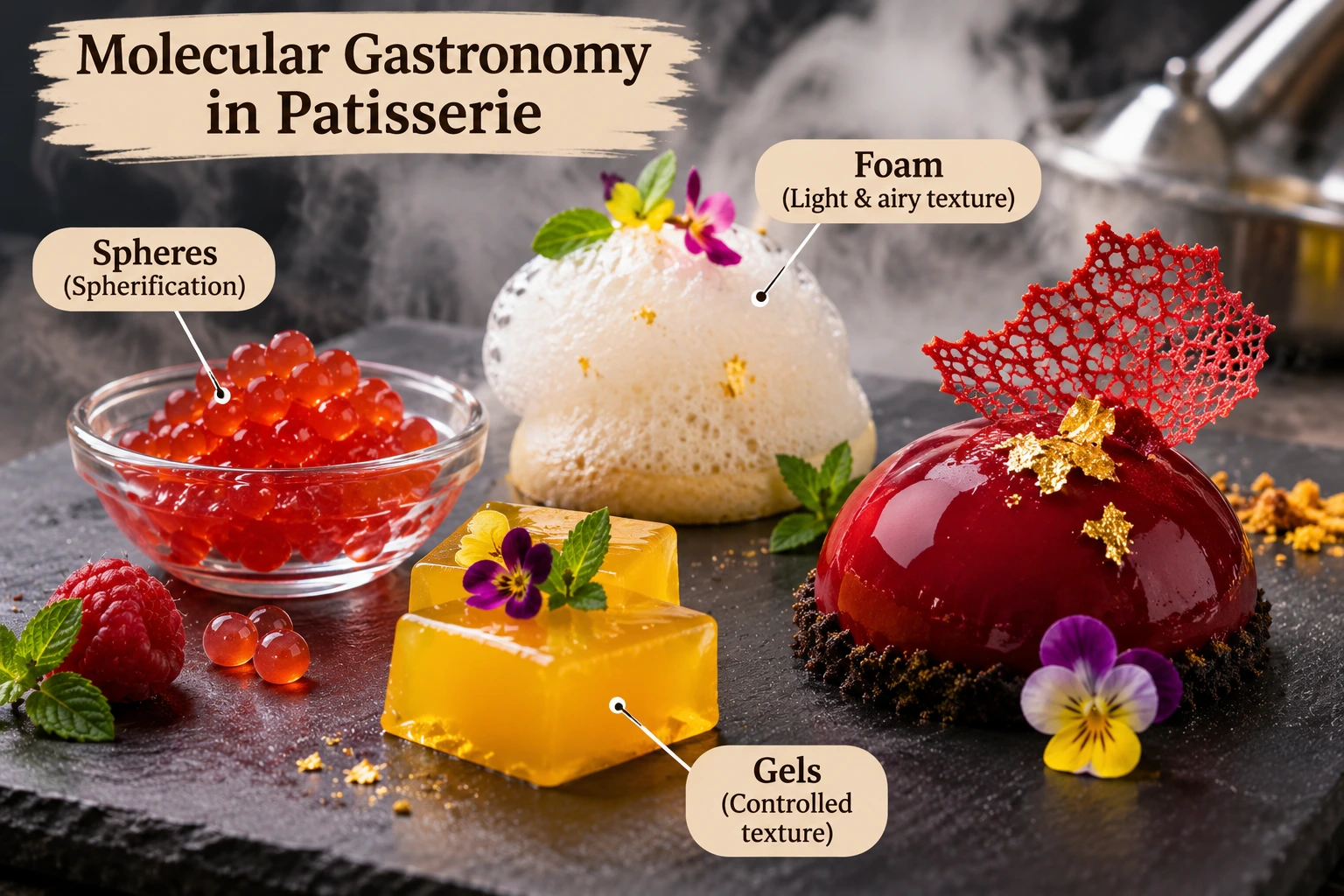
Trends point the same way. Puratos’s Taste Tomorrow research names zesty flavours, bold textures and mindful portions as the top patisserie trends for 2026. Texture-led, smaller desserts suit a technique-driven approach.
Global influence, with an Indian twist
Gastronomy connects a kitchen to food cultures worldwide:
- France: croissants, macarons, éclairs, entremets
- Italy: tiramisu, cannoli, panettone
- Austria: Sachertorte, apple strudel
- Japan: Japanese cheesecake, delicate fruit-based pastries
- India: traditional sweets, regional ingredients and fusion desserts
The opportunity for Indian bakers is combining international technique with local ingredients.
Dessert plating: the eye eats first
A professionally plated dessert often has a main component, a sauce, a crunchy element, a fresh fruit garnish and a complementary cream or mousse. Use colour, shape and height to guide the eye, but keep every element edible and purposeful. The goal is balance between appearance, taste and texture.
Innovation: eggless, vegan, gluten-free and reduced-sugar
Today’s customers expect more than classic recipes. Common directions include:
- eggless and vegan bakery products
- gluten-free breads and desserts
- reduced-sugar cakes and pastries
- Indian and international fusion desserts
- seasonal, locally sourced ingredients
This is where science pays off. Eggs contribute structure, emulsification and browning, so an eggless version must replace those jobs, not just one ingredient. The same logic applies to sugar, which affects browning, moisture and texture as well as sweetness.
Career paths in bakery gastronomy
| Role | Where gastronomy knowledge helps most |
|---|---|
| Pastry chef | Balancing flavour, texture and plating |
| Artisan baker | Fermentation and crust development |
| Chocolatier | Tempering and crystallization |
| Dessert specialist | Plated desserts and texture contrast |
| Bakery entrepreneur | Menu development, consistency, costing |
| R&D chef / product developer | Reformulating products (eggless, reduced-sugar) |
| Food stylist | Presentation and visual balance |
Common mistakes students make
- Memorizing recipes without the reason. You can’t fix a failed batch if you don’t know why it works.
- Using one tempering temperature for every chocolate. Check the product guide.
- Chasing sweetness. Missing acid or salt makes a dessert taste flat.
- Changing ingredients without replacing their function. Eggless and reduced-sugar versions need adjustments to structure and moisture.
- Plating for looks only. Every element should add taste or texture.
A simple learning checklist
- Bake one dough at two oven temperatures and note colour, aroma and crust.
- Temper a small batch of chocolate and test for snap and shine.
- Build one dessert with three textures and one acidic element.
- Remake a classic with one change (eggless or reduced-sugar) and record what shifted.
- Plate the same dessert two ways and compare.
Conclusion
Gastronomy turns baking from following steps into making decisions. Know the reactions, balance flavour and texture, and test changes one at a time. That is how a baker or pastry chef moves from copying recipes to creating them.
Want to learn this hands-on?
Explore bakery and patisserie training at Servo Hotel School and practise these techniques in a real kitchen.
Visit Servo Hotel School